Subtotal $0.00






Email : 65
The most liberating line item you’ll ever add to your cap table is God’s name.
Every founder agreement starts the same way: “This is mine.” We trademark it, copyright it, and put “Founder & CEO” in our bio to prove it.
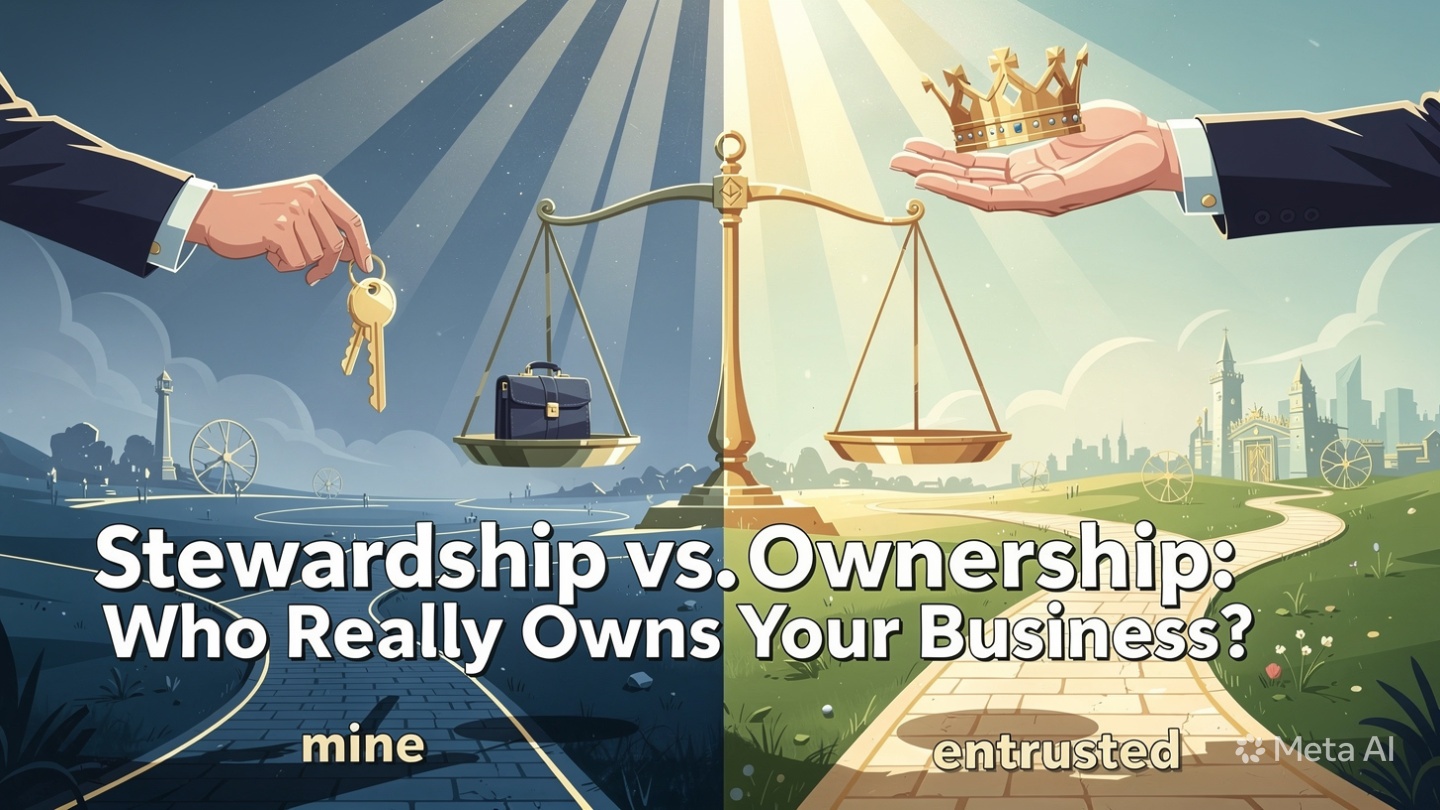
But Scripture starts from the opposite premise. You don’t own your business. You manage it. And that one mindset shift changes how you hire, spend, risk, and rest.
The Illusion of “My” Company
Look at any balance sheet long enough and you’ll believe you built it. But Moses warned Israel before they entered their version of a booming economy:
“But remember the Lord your God, for it is he who gives you the ability to produce wealth.” Deuteronomy 8:18
Ability. Not just funding. The instinct to sell, the skill to code, the discipline to execute — all of it is leased, not owned.
David said it even clearer after bankrolling the temple project:
“But who am I, and what is my people, that we should be able thus to offer willingly? For all things come from you, and of your own have we given you.” 1 Chronicles 29:14
If everything comes from Him, then your Stripe dashboard is really His dashboard. You’re just the admin.
Planning Without the White-Knuckle Grip
Stewardship doesn’t kill ambition. It kills anxiety. James called out first-century entrepreneurs for the same forecasting error we make in Notion today:
“Now listen, you who say, ‘Today or tomorrow we will go to this or that city, spend a year there, carry on business and make money.’ Why, you do not even know what will happen tomorrow… Instead, you ought to say, ‘If it is the Lord’s will, we will live and do this or that.’” James 4:13-15
The problem isn’t the plan. It’s the presumption. Stewards write their Q4 goals in pencil. God holds the eraser. That’s not weakness. That’s risk management with eternity in view.
The Audit You Can’t Escape
Jesus told a story every founder should memorize. A businessman entrusts capital to three managers. Two invest. One buries it to “play it safe.”
The master returns and says to the first two:
“Well done, good and faithful servant! You have been faithful with a few things; I will put you in charge of many things.” Matthew 25:21
The third guy gets fired. Jesus calls him “wicked.” Why? Because in God’s economy, buried talent is bad stewardship. Your P&L is a discipleship tool. How you handle money trains you for how God can trust you with people and influence.
“So if you have not been trustworthy in handling worldly wealth, who will trust you with true riches?” Luke 16:11
From Empire-Building to Kingdom-Deploying
Owners ask, “How do I get more?” Stewards ask, “Why was I given this?”
Joseph ran Egypt’s economy during a famine. He didn’t monetize the crisis. He managed surplus so nations survived. Genesis 41. He understood his promotion wasn’t for his portfolio. It was for God’s purposes.
Empires end at your funeral. Assignments outlive you.
Field Notes for This Week
1. Re-label one thing. In your project manager, change “My team” to “The team I steward.” Watch how it changes your 1:1s.
2. Pray over your forecast. Before your next planning session, read James 4:15 out loud: “Lord, if You will it, we’ll hit this. If not, redirect us.”
3. Deploy one buried asset. What contact, skill, or chunk of cash have you been sitting on? Put it to work in 7 days.
Closing Line
Ownership is a heavy title. Stewardship is a lighter yoke. The real Owner has unlimited resources. Your job is to manage what He provides, for His purposes. That’s not just theology. It’s the best succession plan you’ll ever have.
CTA
This week, make it legal in your heart: sign your business over to God. Write a one-sentence “Deed of Dedication” and stick it on your desk. Then take a photo and tag me or reply with it. I’m featuring 3 reader submissions in next week’s post on The Joseph Principle.